Was Humpty Dumpty Really a Civil War Cannon?
Ask around and you will find someone eager to tell you the “real” Humpty Dumpty: not an egg at all, but a great cannon perched on a wall during the English Civil War, brought crashing down when the wall was breached. It is specific, martial, and satisfying — the kind of fact people love to deploy. It is also, as far as any historian can show, entirely made up.
The Real Story
- Popular claim
- Humpty Dumpty was a cannon destroyed at the 1648 siege of Colchester.
- Verdict
- Myth
- The record
- No contemporary source connects the rhyme to a cannon; the story appears only in the late twentieth century.
The cannon story, in full
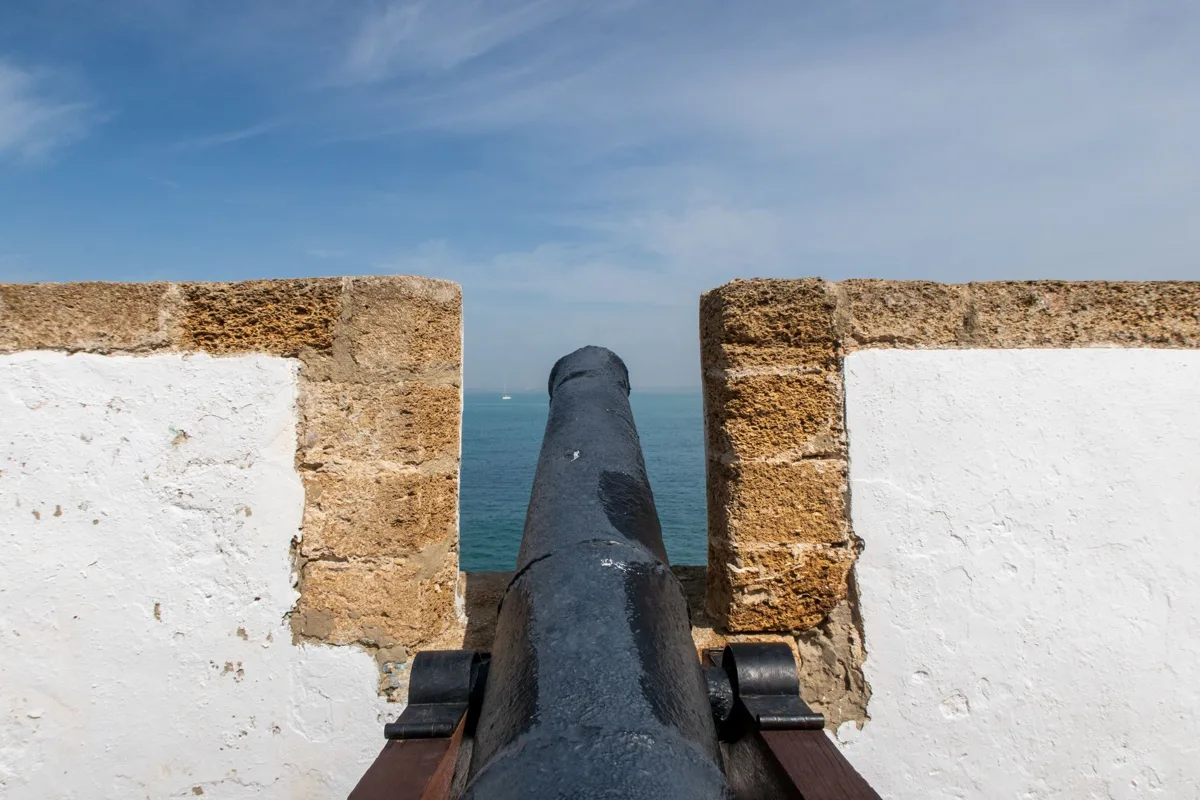
The popular version is unusually detailed. During the 1648 siege of Colchester, it says, a large cannon nicknamed Humpty Dumpty was mounted atop a church tower or town wall by Royalist defenders. When Parliamentarian fire brought the wall down, the heavy gun tumbled to the ground, and no effort by the king’s soldiers and horses could haul it back up and remount it — hence “all the king’s horses and all the king’s men couldn’t put Humpty together again.” The precision is part of the appeal; it sounds like something recovered from an archive.
Why it’s a modern invention
The problem is that no such archive exists. There is no seventeenth-century dispatch, chronicle, or ballad linking the siege of Colchester to a cannon of that name, or to this rhyme at all. The elaborate wall-top-gun story appears only in the twentieth century, presented with the confident specificity that folklore adores and records never supply. When a “secret history” for a rhyme cannot be traced any earlier than living memory, that is usually a sign it was manufactured within it. The rhyme itself, meanwhile, is comparatively young in print, surfacing around the turn of the nineteenth century — well over a century after the siege it supposedly commemorates, with total silence in between.
What Humpty Dumpty actually was
The likeliest truth is simpler and rather charming: Humpty Dumpty was a riddle. Before he was a character, “Humpty Dumpty” was a piece of wordplay whose answer is an egg. The joke only works if you do not already know the solution — almost anything else that falls off a wall could, in principle, be mended, but an egg emphatically cannot, which is exactly why “all the king’s men” are helpless. Strip away the modern assumption that everyone knows he is an egg, and the verse snaps back into shape as a puzzle to be solved.
A word with a past
The name itself carried other meanings. “Humpty dumpty” was period slang for a drink of ale boiled with brandy, and also for a short, clumsy person — the sort who might be imagined toppling off a perch. Neither sense has anything to do with artillery. The rhyme grew in the soil of ordinary language and play, not military history.
How he became an egg forever
If the riddle’s answer was once a small test of wit, one author fixed it in place permanently. In Lewis Carroll’s Through the Looking-Glass (1871), Humpty Dumpty appears as a proud, argumentative egg seated on a wall, and John Tenniel’s accompanying illustration lodged that image in the popular imagination for good. The riddle had, in effect, been answered on our behalf and then forgotten as a riddle — which is part of why a “hidden meaning” feels necessary. The mystery we sense is really just the ghost of a puzzle whose punchline we already know.
Why the cannon keeps firing
The military version endures because it feels like insider knowledge and bolts a nursery trifle onto a real, dramatic event. But a good story is not a sourced one, and this is worth remembering the next time a familiar rhyme arrives with a startling backstory attached. For the wider pattern of invented rhyme “origins,” see our overview of the real history of nursery rhymes.
Sources
- Iona and Peter Opie, The Oxford Dictionary of Nursery Rhymes (Oxford University Press, 1951).
- “Humpty Dumpty,” Wikipedia.
- Lewis Carroll, Through the Looking-Glass (1871).