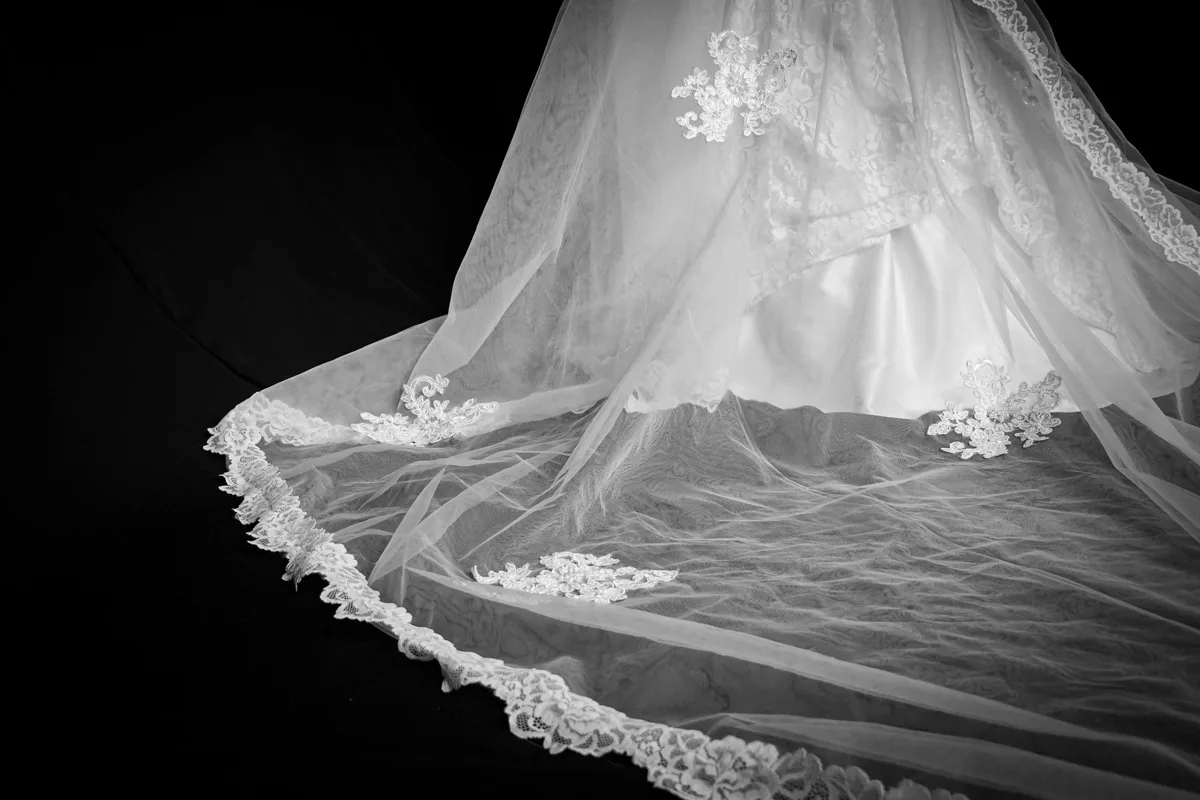
The White Wedding Dress Isn’t an Ancient Symbol of Purity
The popular story, checked against the evidence.
The Real Story
- Popular claim
- Brides have always worn white to symbolize purity.
- Verdict
- Myth
- The record
- Before Queen Victoria's 1840 wedding, brides wore their best dress in any colour; white became fashion, then tradition.
The white wedding dress feels timeless, and it comes with a ready-made explanation: white has always signified the bride’s purity. Both halves of that belief are wrong. The white dress is a fashion less than two centuries old, and the purity symbolism was attached after the fact.
What brides actually wore
For most of history, a bride simply wore her finest dress, whatever its colour. For ordinary women that often meant a practical gown they could wear again — blue, brown, red, black, whatever was good and durable. Rich colours and heavy fabrics signalled wealth far more than any hue signalled virtue. White was, if anything, impractical: hard to keep clean and beyond the means of many. There was no ancient rule that a bride must wear it.
Queen Victoria sets the fashion
The turning point was a single high-profile wedding. When Queen Victoria married Prince Albert in 1840, she wore a white gown — a choice partly meant to showcase delicate handmade lace and to strike a note of understated elegance rather than royal excess. The wedding was widely illustrated and reported, and fashionable brides who could afford it began to imitate her. White spread from the top down as an aspirational trend, not as an inherited rite.
Purity was written in later
Only after white became fashionable did etiquette writers and commentators supply the moralising gloss — that white expressed the bride’s innocence and purity. The symbolism was reverse-engineered onto an existing fashion, then repeated until it felt ancient. This is a common pattern: a custom takes hold for practical or social reasons, and a tidy meaning is invented afterward to explain it.
The verdict
Myth. The white wedding dress is a Victorian fashion that hardened into tradition, and the “purity” reading came later. For a companion case of modern marketing masquerading as timeless romance, see how the traditions we assume are ancient often are not.
Sources
- “Wedding dress,” Wikipedia.
- Queen Victoria’s wedding (1840), widely documented in fashion and social history.
- Encyclopaedia Britannica entries on wedding customs and Victorian fashion.