Where “Raining Cats and Dogs” Really Comes From
The popular story, checked against the evidence.
The Real Story
- Popular claim
- 'Raining cats and dogs' comes from animals falling out of thatched roofs.
- Verdict
- Myth
- The record
- The thatched-roof story is a debunked hoax; the phrase's true origin is genuinely uncertain.
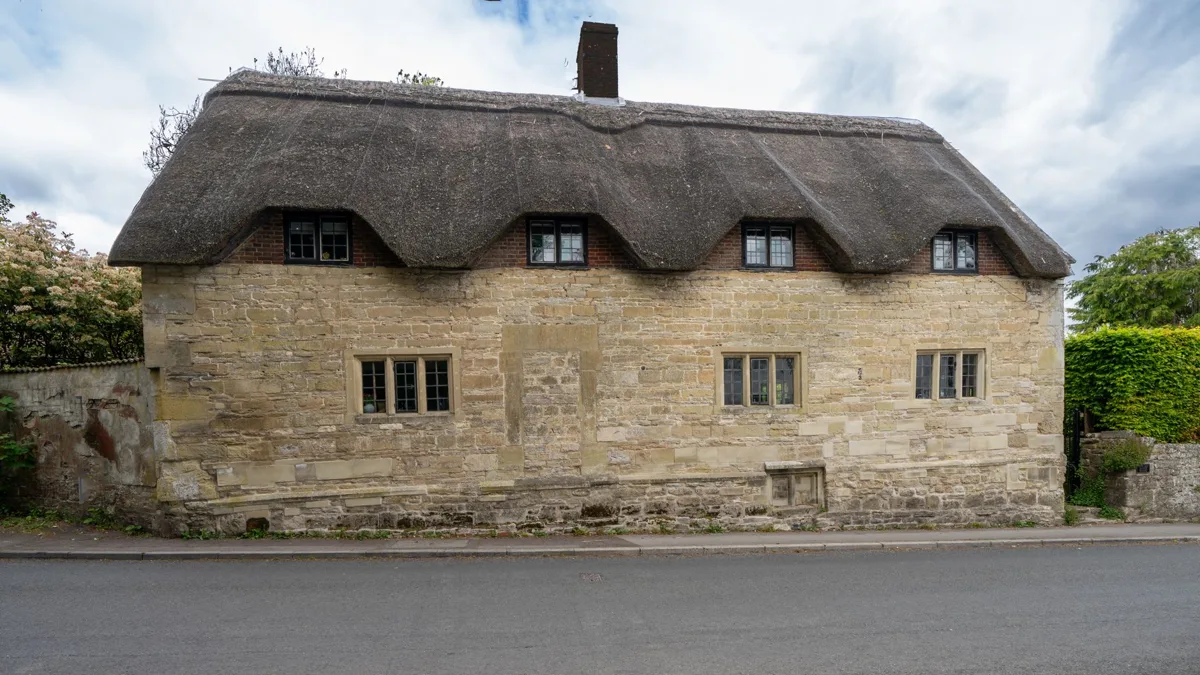
A widely forwarded explanation claims that in old cottages, animals slept in the thatch of the roof, and in heavy rain they were washed out and fell to the ground — hence “raining cats and dogs.” It is vivid, it is often attached to a list of “facts about life in the 1500s,” and it is a hoax.
The thatched-roof story is invented
That entire “life in the 1500s” list — the source of the roof-animals claim and a dozen other too-neat etymologies — is a well-known piece of internet folklore, debunked repeatedly by fact-checkers. Thatch does not work as described, cats did not routinely nest in roofs and rain down on villagers, and no historical source supports the image. It is a story built backward from the phrase to sound charmingly grim.
What we can actually document
The phrase itself is genuinely old. Close variants appear in the seventeenth century — the playwright Richard Brome wrote of it raining “dogs and polecats” in the 1650s — and Jonathan Swift used “rain cats and dogs” in his Polite Conversation in 1738. Swift had earlier written a savage poem, “A Description of a City Shower” (1710), describing filth and drowned animals swept through the gutters of London in a downpour, which may have helped fix the association between violent rain and dead animals in the streets — though as a picture of the aftermath, not a claim that live pets fell from the sky.
The honest answer: nobody is sure
Where did the exact phrase come from? The truthful reply is that we do not know. Etymologists have floated guesses — a garbling of an old word for waterfall, or a Greek phrase meaning “contrary to belief,” or simply the imagery of cats and dogs as a proverbial pairing of chaos and noise — but none is established. An idiom this old often has no recoverable single origin, and inventing one to fill the gap is exactly how myths like the roof story are born.
The verdict
Myth, on the specific claim — and uncertain on the truth. The thatched-roof origin is a debunked hoax; the phrase’s real source is unknown. Preferring an honest “we don’t know” to a tidy invention is the whole method behind the real origins of everyday sayings.
Sources
- Jonathan Swift, A Complete Collection of Genteel and Ingenious Conversation (1738); “A Description of a City Shower” (1710).
- Michael Quinion, World Wide Words, on “raining cats and dogs.”
- Snopes, debunking of the “Life in the 1500s” email.