Where the Name “Crayola” Comes From
The popular story, checked against the evidence.
The Real Story
- Popular claim
- 'Crayola' is a made-up nonsense brand name.
- Verdict
- True origin
- The record
- 'Crayola' joins French 'craie' (chalk) with 'ola' (from oleaginous, oily); it was coined by Alice Binney in 1903.
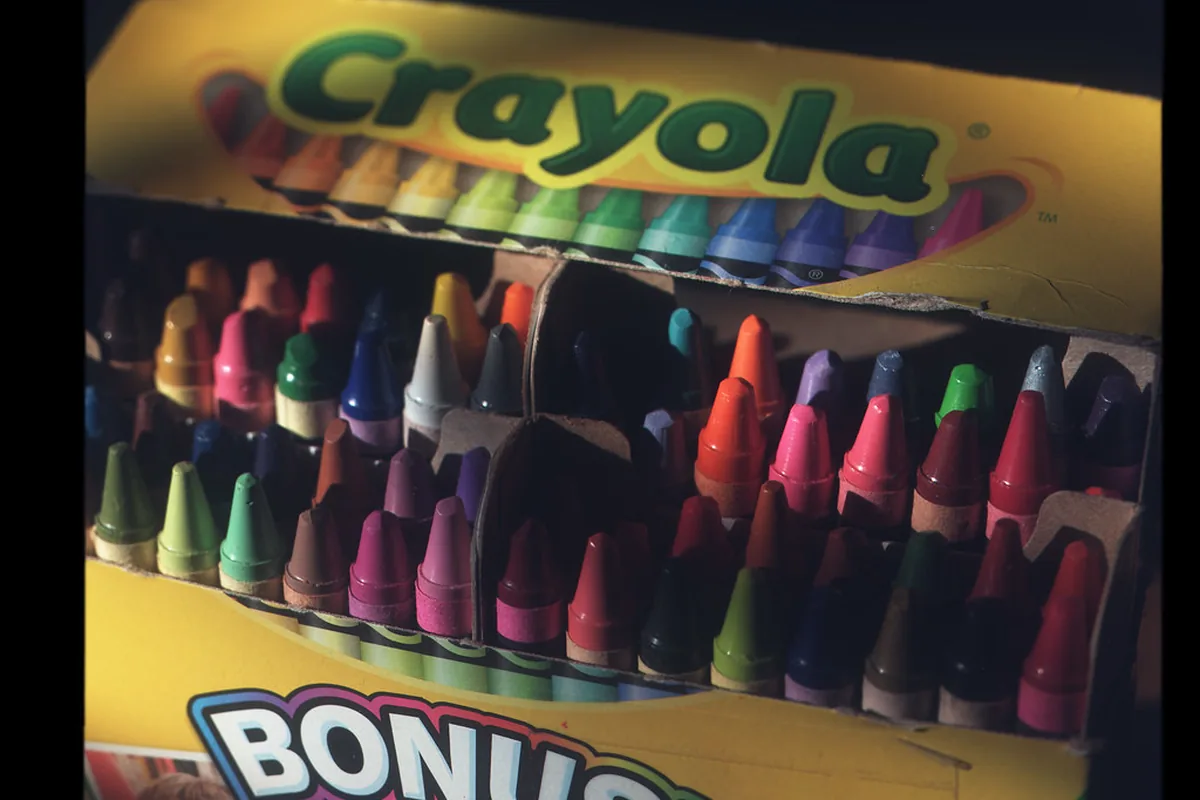
“Crayola” sounds like pure invented brand-babble — a pleasant, meaningless word chosen because it rolls off the tongue. In fact it is a small, deliberate piece of word-building, and it describes exactly what the product is.
Chalk and oil
The name was coined in 1903, when the American firm Binney & Smith introduced its now-famous crayons. Credit goes to Alice Stead Binney, the wife of co-founder Edwin Binney, who assembled the word from two parts. The first is craie, the French word for chalk — a nod to the stick form and the drawing purpose. The second is ola, drawn from “oleaginous,” meaning oily, a reference to the oily, waxy paraffin base that made the crayons smooth and colourful. Chalk plus oily: a crayon, more or less defined in its own name.
A company already in colour
Binney & Smith were well placed to make them. The company already produced pigments and industrial products — including, famously, materials like the carbon black used in tyres and the slate pencils and dustless chalk sold to schools. Turning that expertise in pigment and marking materials toward inexpensive, brightly coloured wax crayons for children was a natural step, and the Crayola line became one of the most recognisable products in the world.
So the name is neither random nor a modern marketing confection. It is an Edwardian coinage that quietly encodes the product’s materials — the kind of small, true origin that is more satisfying than the invented ones, and a companion to the real story behind the name “Lego.”
The verdict
True origin. “Crayola” joins French craie (chalk) with ola from “oleaginous” (oily), coined by Alice Binney in 1903. For more names and objects with documented backstories, see the true stories behind famous toys and mascots.
Sources
- “Crayola” and Binney & Smith history, Wikipedia.