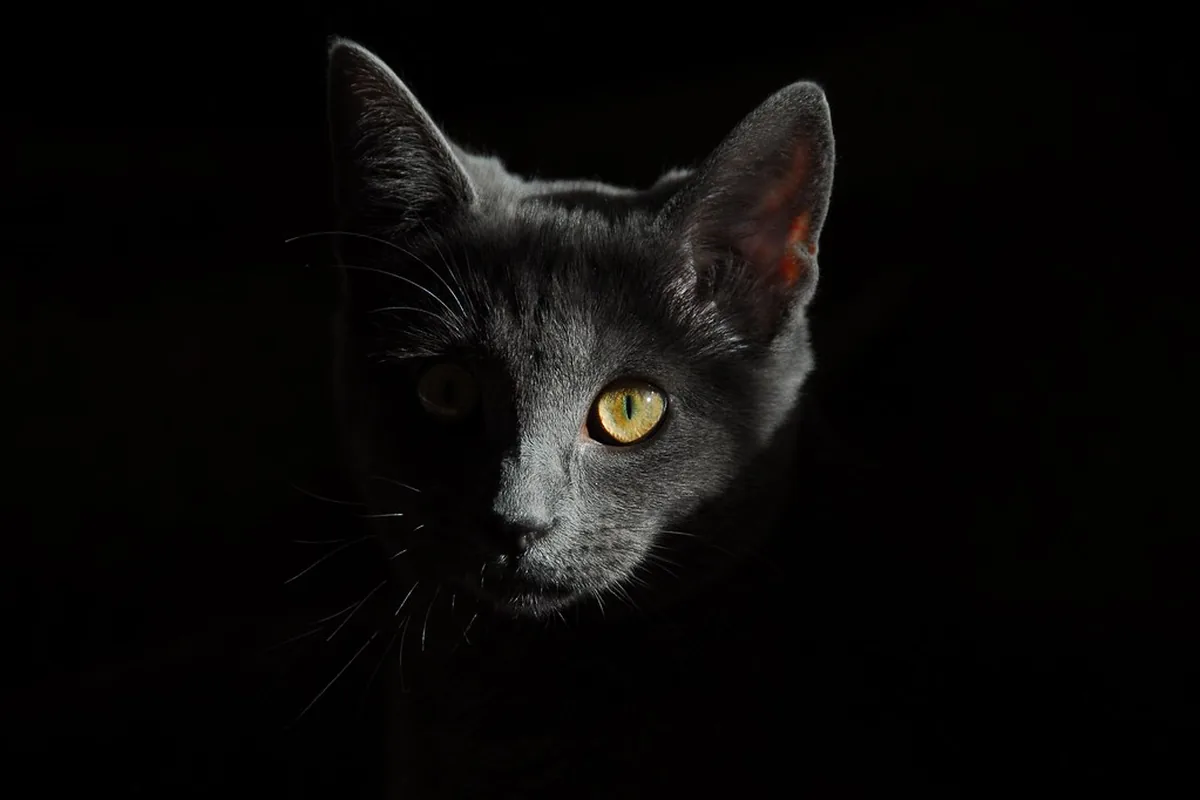
Why Black Cats Are Considered Unlucky
The popular story, checked against the evidence.
The Real Story
- Popular claim
- Black cats have long been considered bad luck.
- Verdict
- True (but local)
- The record
- Medieval European folklore did link black cats to witchcraft; elsewhere, such as Britain and Japan, they are lucky.
The idea that a black cat crossing your path is bad luck is real, old, and genuinely rooted in the historical record — but it comes with a twist the superstition rarely admits: whether the cat is unlucky depends entirely on where you happen to be standing.
The medieval fear
In much of medieval and early-modern Europe, cats — and black cats especially — became entangled with fear of witchcraft. In the popular and sometimes official imagination, a witch was thought to keep animal “familiars,” and the black cat, nocturnal and self-possessed, was a natural candidate. During the height of the witch panics, this association could be dangerous for the animals, which were linked to the Devil and evil in sermons, stories, and trial lore. This is not internet embroidery; the connection between black cats, witches, and misfortune is well attested in the folklore and the witch-hunt culture of the period.
But luck is regional
What the “black cats are unlucky” claim leaves out is that the belief is far from universal. In parts of Britain, a black cat crossing your path is considered good luck, and a black cat arriving at the home is welcomed as fortunate. In Japanese tradition, black cats have positive associations too, linked to warding off bad luck. Even within the West, the omen flips from region to region. So the superstition is real, but it is a local custom dressed as a universal law — the opposite meaning is equally “traditional” a few countries away.
A caution about the plague
One popular embellishment deserves a flag: the claim that medieval Europeans killed so many cats that rat populations exploded and worsened the Black Death. It is a tidy, satisfying story, but it is not well supported by the evidence and should be treated as speculation rather than established fact — a reminder to be wary even of “dark” add-ons to a real superstition.
The verdict
True, but local. The black-cat superstition really does have medieval roots in witch belief — yet in other cultures the very same cat is lucky. It is a superstition with genuine history and a strongly regional meaning, of the sort we examine across the real origins of everyday sayings.

Sources
- “Black cat,” Wikipedia.
- Folklore histories of cats, witchcraft, and the early-modern witch trials.