Play-Doh Was Invented to Clean Wallpaper
The popular story, checked against the evidence.
The Real Story
- Popular claim
- Play-Doh started as a wallpaper-cleaning product.
- Verdict
- True
- The record
- The compound was first sold as a wallpaper cleaner, then rebranded as a children's toy in the 1950s.
One of the most familiar smells of childhood began life as a cleaning product. Play-Doh was not designed for play at all — it was a pliable putty made to solve a very grown-up, and now nearly forgotten, household problem.
A putty for a sooty age
In the first half of the twentieth century, many homes were heated by coal, and coal smoke left a film of grimy soot on walls. Much wallpaper of the era could not simply be wiped down with a wet cloth. The answer was a soft, doughy compound — manufactured by a Cincinnati soap company, Kutol — that you rolled over the paper to lift the soot away. It was, in effect, an eraser for walls, and for a time it sold well.
A product running out of purpose
Then the market vanished from under it. As homes switched from coal to cleaner heating like natural gas and oil, walls stopped getting sooty. Washable vinyl wallpapers arrived that could be cleaned with a sponge. The wallpaper-cleaning putty was becoming a solution to a problem that no longer existed, and the company that made it was in trouble.
Saved by children
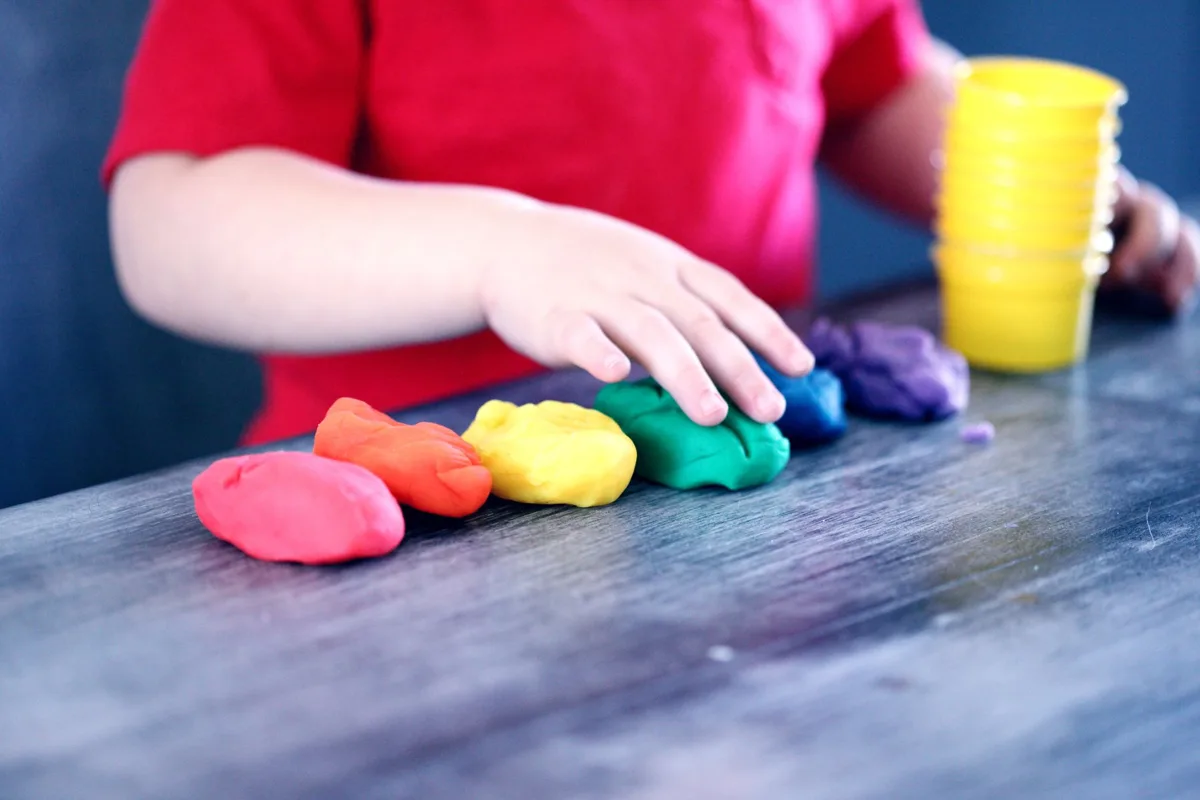
The rescue came from noticing how the stuff was already being used. Accounts credit a family member — a nursery-school teacher — with realising that children could mould the soft, non-toxic compound into shapes far more happily than they could handle stiff modelling clay. The makers removed the cleanser’s detergent, added colour and a pleasant scent, and relaunched it in the mid-1950s as a toy: Play-Doh. A failing industrial product became one of the best-selling playthings in history simply by changing who it was for.
The verdict
True. Play-Doh began as a wallpaper cleaner and was reinvented as a children’s toy when its original market disappeared — a classic example of an accidental second life, of the kind we collect across the true stories behind famous toys and mascots.
Sources
- “Play-Doh,” Wikipedia.
- Smithsonian and toy-history accounts of Kutol’s wallpaper cleaner and its rebranding.