The Real Origins of Halloween: Samhain, Saints, and Turnips
The popular story, checked against the evidence.
The Real Story
- Popular claim
- Halloween is either purely pagan or a modern commercial invention.
- Verdict
- It’s complicated
- The record
- Halloween blends the Gaelic festival of Samhain with the Christian All Hallows' season; its customs have deep, documented roots.
Halloween attracts two opposite oversimplifications. One says it is a purely pagan, even sinister, ritual in a plastic costume. The other says it is a hollow invention of candy and greeting-card companies. The documented history is more interesting than either: Halloween is a genuine layering of Celtic seasonal festival and Christian holy days, with folk customs that are centuries old.
Samhain: the older layer
The deepest root is Samhain, the Gaelic festival marking the end of the harvest and the start of winter, around the first of November. It was a threshold time, when the boundary between the living and the dead was felt to thin, and communities lit bonfires and took stock before the dark half of the year. This is real, attested tradition — not a modern reconstruction — though we should be careful not to project every later custom back onto it.
All Hallows: the Christian layer
Over this fell the Christian calendar. All Saints’ Day (All Hallows) on November 1, with All Souls’ Day following on November 2, created a season for remembering the dead. “Halloween” is simply a contraction of All Hallows’ Eve, the night before. Far from being opposed, the pagan and Christian observances of late autumn braided together over centuries into a single season of the dead.
Where the customs come from
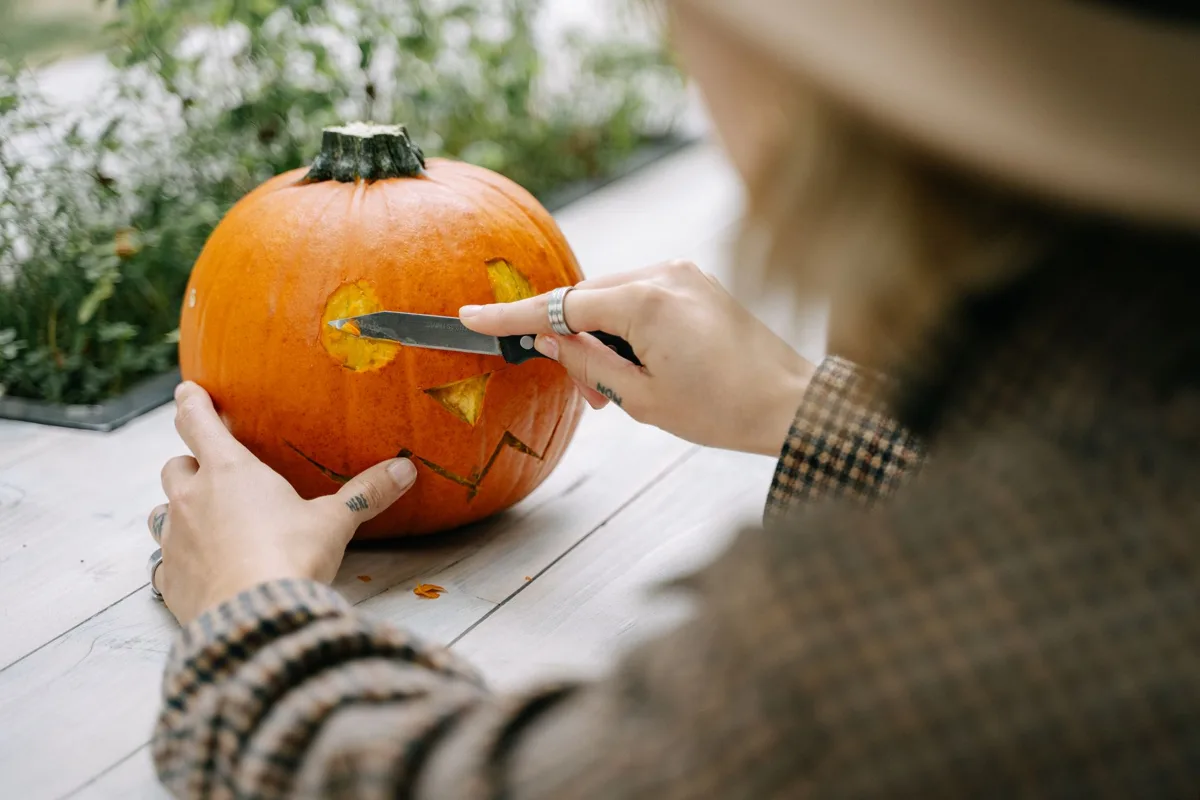
The familiar practices have traceable pedigrees. Trick-or-treating descends from “souling” — the medieval custom of going door to door offering prayers for the dead in exchange for “soul cakes” — and from Scottish and Irish “guising,” where costumed young people performed for food or coins. The jack-o’-lantern began not as a pumpkin but as a carved turnip or beet in Ireland and Scotland, tied to the folk tale of “Stingy Jack,” doomed to wander with a hollowed lantern. Irish immigrants carried the custom to North America, where the native pumpkin proved far easier to carve.
The verdict
It’s complicated — and that is the honest answer. Halloween is neither a single pagan rite nor a corporate confection; it is a real fusion of Samhain and the Christian All Hallows season, with customs that predate the candy aisle by centuries. For more traditions with layered, misremembered roots, see where holiday traditions really come from.
Sources
- Nicholas Rogers, Halloween: From Pagan Ritual to Party Night (Oxford University Press, 2002).
- “Halloween,” Encyclopaedia Britannica.
- “Halloween,” Wikipedia.