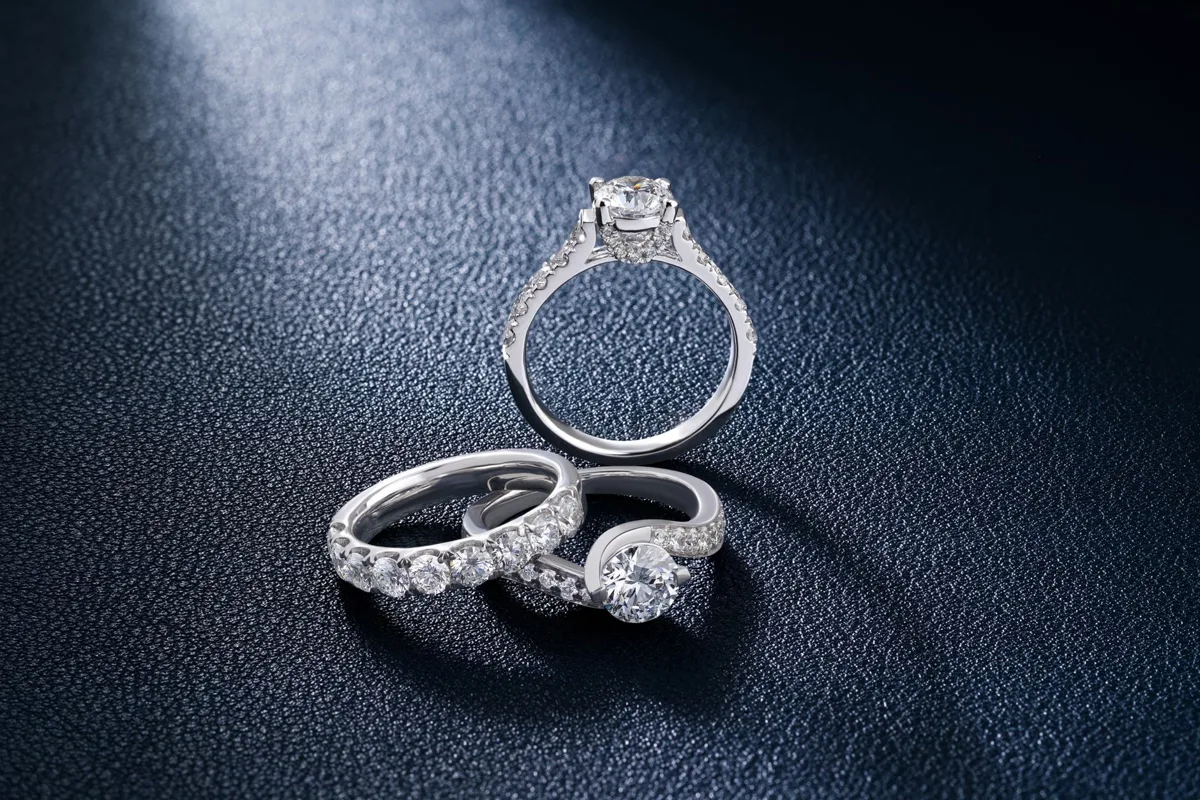
The Diamond Engagement Ring Is a Marketing Invention
Few objects feel more timeless than the diamond engagement ring, and few have a birth certificate so easy to read. The near-universal belief that a proposal requires a diamond is not an ancient romantic tradition. It is, to an almost embarrassing degree, the achievement of a single advertising campaign — one so successful that it convinced the world it had always been true.
The Real Story
- Popular claim
- The diamond engagement ring is an ancient romantic tradition.
- Verdict
- Marketing
- The record
- Diamond engagement rings became standard only after De Beers' campaign from 1938 and the 1947 slogan 'A Diamond Is Forever.'
Before the campaign, diamonds were optional
Engagement rings themselves are genuinely old, but the diamond ring as the default was not. For most of history a betrothal ring might feature any stone, or none; diamonds were rare, costly, and far from the assumed centrepiece of a proposal. By the early twentieth century, diamond sales were actually weak, and there was no widespread cultural rule that a proper engagement demanded one. The “tradition” we now treat as eternal had not yet been invented.
1938: a supply problem meets an ad agency
The turning point was commercial. The diamond firm De Beers, which controlled much of the world’s diamond supply, faced sagging demand and, in 1938, hired the advertising agency N. W. Ayer to fix it. The strategy was patient and sophisticated: rather than push a product, it set out to reshape a culture. The campaign placed diamonds in Hollywood films and on the hands of glamorous stars, fed stories linking diamond size to romantic devotion, and quietly taught the public that a diamond was the natural, expected symbol of enduring love. It was, in effect, an effort to make an emotion and a purchase inseparable.
“A Diamond Is Forever”
The masterstroke came in 1947, when an Ayer copywriter named Frances Gerety wrote four words to close an ad: “A Diamond Is Forever.” The line fused the stone’s physical hardness to the permanence of marriage, and it worked so completely that it was later named one of the greatest advertising slogans of the twentieth century. The message was clear and self-reinforcing: because your love is forever, the diamond must be too — and because the diamond is forever, you must never resell it.
Inventing the price tag
The campaign did not stop at sentiment; it engineered spending norms. The now-familiar guidance that a ring should cost a certain number of months’ salary was a marketing suggestion, adjusted over time, not a folk custom — a way of setting a socially enforced floor on what a suitor ought to spend. Within a couple of decades, the diamond engagement ring went from uncommon to practically obligatory, and the invented expectation hardened into something that felt inherited.
The forever that isn’t
There is a sharp irony buried in the slogan. As the journalist Edward Jay Epstein detailed, diamonds are notoriously difficult to resell for anything close to their retail price — the “forever” that keeps them out of the second-hand market also keeps their value from behaving like an investment. The instruction never to sell your diamond is precisely what protects the illusion that it holds its worth. A tradition sold as timeless permanence turns out, on inspection, to be a carefully maintained one-way street.
Why the myth of timelessness sticks
The campaign succeeded so thoroughly that its own history became invisible; a manufactured expectation, repeated across generations, simply feels like heritage. Recognising the seams — the 1938 strategy, the 1947 slogan, the invented salary rule — does not require cynicism about love, only clarity about marketing. It is the clearest modern cousin of the white wedding dress, another recent fashion widely mistaken for ancient custom, as explored across where holiday traditions really come from.
The verdict
Marketing. The diamond engagement ring as a “timeless” necessity is largely a creation of De Beers advertising from 1938 onward, crowned by the 1947 slogan “A Diamond Is Forever.”
Sources
- “A Diamond Is Forever” and De Beers advertising history, Wikipedia.
- Edward Jay Epstein, “Have You Ever Tried to Sell a Diamond?” The Atlantic (1982).