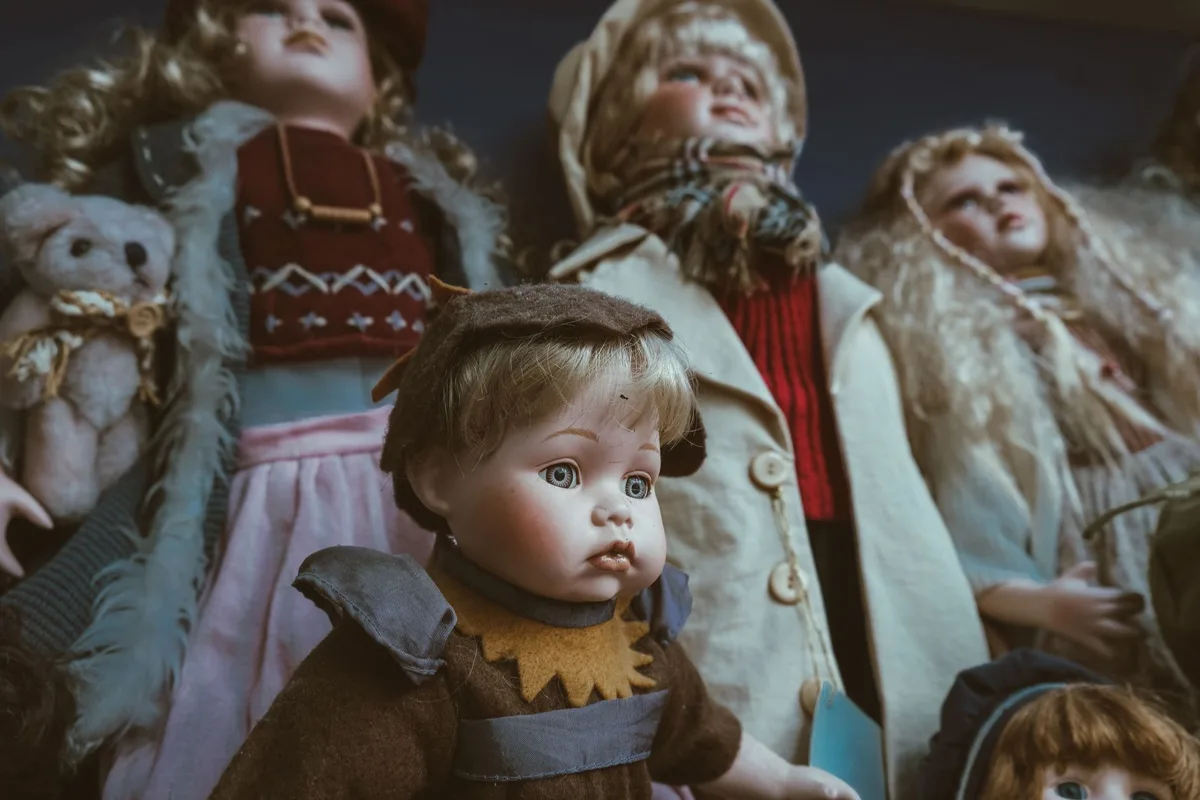
Barbie’s Surprising Origin: A Racy German Novelty Doll
The popular story, checked against the evidence.
The Real Story
- Popular claim
- Barbie was modeled on a German adult novelty doll.
- Verdict
- True
- The record
- Ruth Handler based Barbie on the Bild Lilli doll, a risque gag gift derived from a German comic strip.
The wholesome all-American toy has a distinctly less wholesome grandmother. Before Barbie, there was Bild Lilli — and the resemblance is no coincidence.
Lilli was not a children’s toy
In post-war Germany, the tabloid Bild-Zeitung ran a popular comic strip featuring Lilli, a knowing, glamorous young woman with a sharp tongue and an eye for wealthy men. In 1955 she was turned into a plastic doll — but not for little girls. The Bild Lilli doll was a novelty item marketed to adults, a cheeky gag gift sold in tobacconists and bars, essentially a three-dimensional pin-up joke. Her adult, fashion-model figure was part of the punchline.
Ruth Handler’s European discovery
Ruth Handler, co-founder of Mattel, had already been arguing that girls wanted a grown-up doll they could dress and project themselves onto, rather than only baby dolls. The idea crystallised on a trip to Europe, where she encountered the Lilli doll and bought several. Handler brought them home, and Mattel reworked the concept into a doll of its own. Barbie debuted in 1959, named after Handler’s daughter, Barbara.
The lineage is not merely thematic. The two dolls share an unmistakable body and bearing, and the connection was later formalised in the most direct way possible: Mattel acquired the rights to Bild Lilli in 1964, and production of the German doll stopped. The novelty ancestor was, in effect, bought out by its more famous descendant.
Why the origin gets tidied away
Corporate histories tend to prefer a clean creation myth — inspiration striking a visionary founder — to a story that begins with an adult gag gift in a German bar. That is understandable branding, but it flattens a more interesting truth. Barbie’s design did not appear from nowhere; it was adapted, quite closely, from an existing doll with a very different intended buyer.
The verdict
The surprising origin is real and well documented: Barbie’s direct model was Bild Lilli, a risqué novelty for adults. Knowing that does not diminish Barbie’s cultural impact, but it complicates the fairy-tale of her invention — the kind of complication we look for across the true stories behind famous toys and mascots.
Sources
- M. G. Lord, Forever Barbie: The Unauthorized Biography of a Real Doll (1994).
- “Bild Lilli doll,” Wikipedia.
- “Barbie,” Wikipedia.